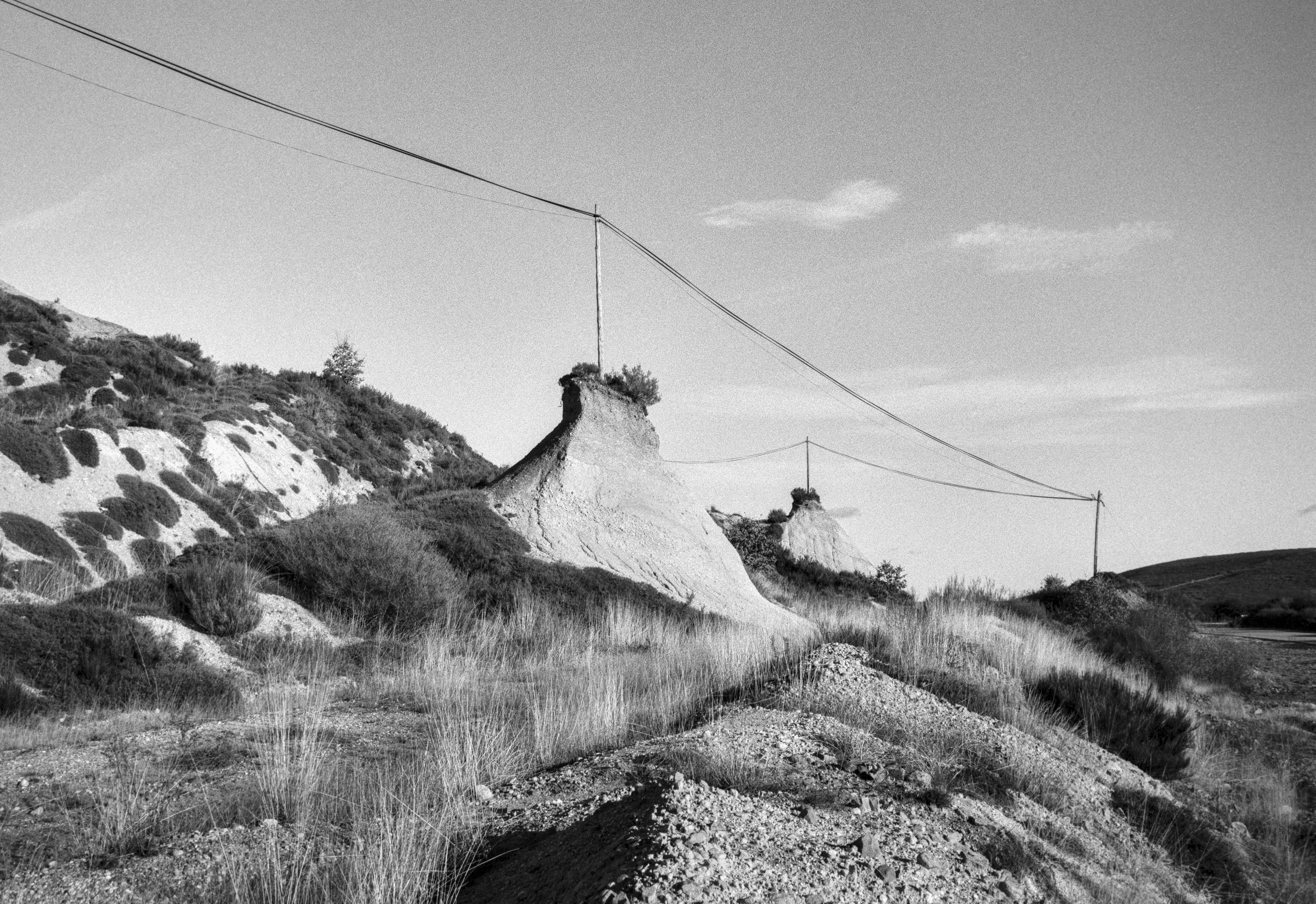
Regardless of how visually appealing this photo might be, for me it represents a huge leap in my journey with analog photography. I could even say that, in a way, it feels like a leap into the unknown, but I believe it will be worth it.
Since I began my analog adventure, I’ve had to face quite a few challenges. Getting a Leica M camera means getting used to using a rangefinder, which isn’t particularly complicated, but does require a bit of practice. I have to admit that the Leica M6 made things very easy for me, and its rangefinder is nothing like the one on my parents’ old Yashica, which often felt more like an act of faith than a precise tool.
The Leica’s rangefinder is incredibly sharp and bright, and that clarity, combined with the smooth and precise feel of M lenses, turns focusing into something simple and truly enjoyable. It was a small adjustment process that I never really considered a challenge. Adjusting exposure wasn’t difficult either, thanks to the arrow and dot meter system found in M cameras, which makes the task very straightforward.
What proved to be much more complicated was the developing process, which caused me more than one headache, especially when I mixed up the order of the chemicals (spoiler: if you get the sequence wrong, you’ll lose all your photos). I also had several issues using the LAB-BOX, a supposedly easier developing system that doesn’t require loading the film in the dark, but which ended up causing me all kinds of trouble with scratches and stains most of the time. In the end, using a changing bag and a standard tank is much simpler. If I had dared to go with that setup from the beginning, I would’ve saved myself a lot of trouble.
Scanning also comes with its own complexity, especially when it comes to properly adjusting levels and correcting defects that show up on the negatives. Scanning and editing each frame takes a lot of time, but it’s work that ultimately pays off in image quality, it forces you to analyze your shots more deeply and fine-tune a lot more elements than you normally would.
After going through all these learning steps, which I adapted to gradually, I decided to take things a bit further and eliminate any kind of electronic assistance when it comes to exposure. Until now, I had been using Leica M cameras with built-in light meters, first the M6 and then the MP. But a few weeks ago, I decided to get a Leica M-A, a fully mechanical camera with no electronic components whatsoever. That means giving up any exposure aid entirely. Sometimes, when I think about it, it makes me a little nervous, but deep down I’m convinced it’s going to help me go even deeper into the photographic process, making me fully aware of the light conditions and the most appropriate settings for each shot.
The photograph that accompanies these lines was one of the first I took with the Leica M-A, and although the exposure isn’t perfect, the result is more than acceptable. The lack of a light meter forced me to really think about the light and carefully consider every setting, balancing shutter speed and aperture. It’s another step toward full awareness in the act of image-making, and while it adds an extra layer of effort, the learning it offers, and the depth it brings to each photo, is simply unmatched.
Beyond all the technical stuff, I have to admit that the landscape around Soto y Amío played a big part in this photo. The unusual excavation and the fragile balance of the electric structure created a unique and visually striking scene. It’s one of those places that, when you’re driving by, practically yells “Stop! There’s a photo here!”, and it doesn’t disappoint, because it translated beautifully onto the negative, which doesn’t always happen. It was a day full of technical challenges, yes, but also deeply rewarding in every way.
