It is undeniable that today’s shopping centers have transcended the mere act of shopping, becoming genuine leisure hubs. Most are spacious, featuring pleasant galleries for strolling as our neurons eagerly respond to the barrage of stimuli enticing us to consume, regardless of whether we truly need anything or not. There are also culinary attractions that encourage us to sample dishes from diverse origins. Furthermore, there’s even space dedicated to body care and exercising at gyms, in case guilt sets in after indulging in the hospitality area. You can even get a haircut or opt to scorch the hair follicles on your legs or back if deemed necessary. The variety is simply overwhelming. These places are true temples of marketing and consumerism.
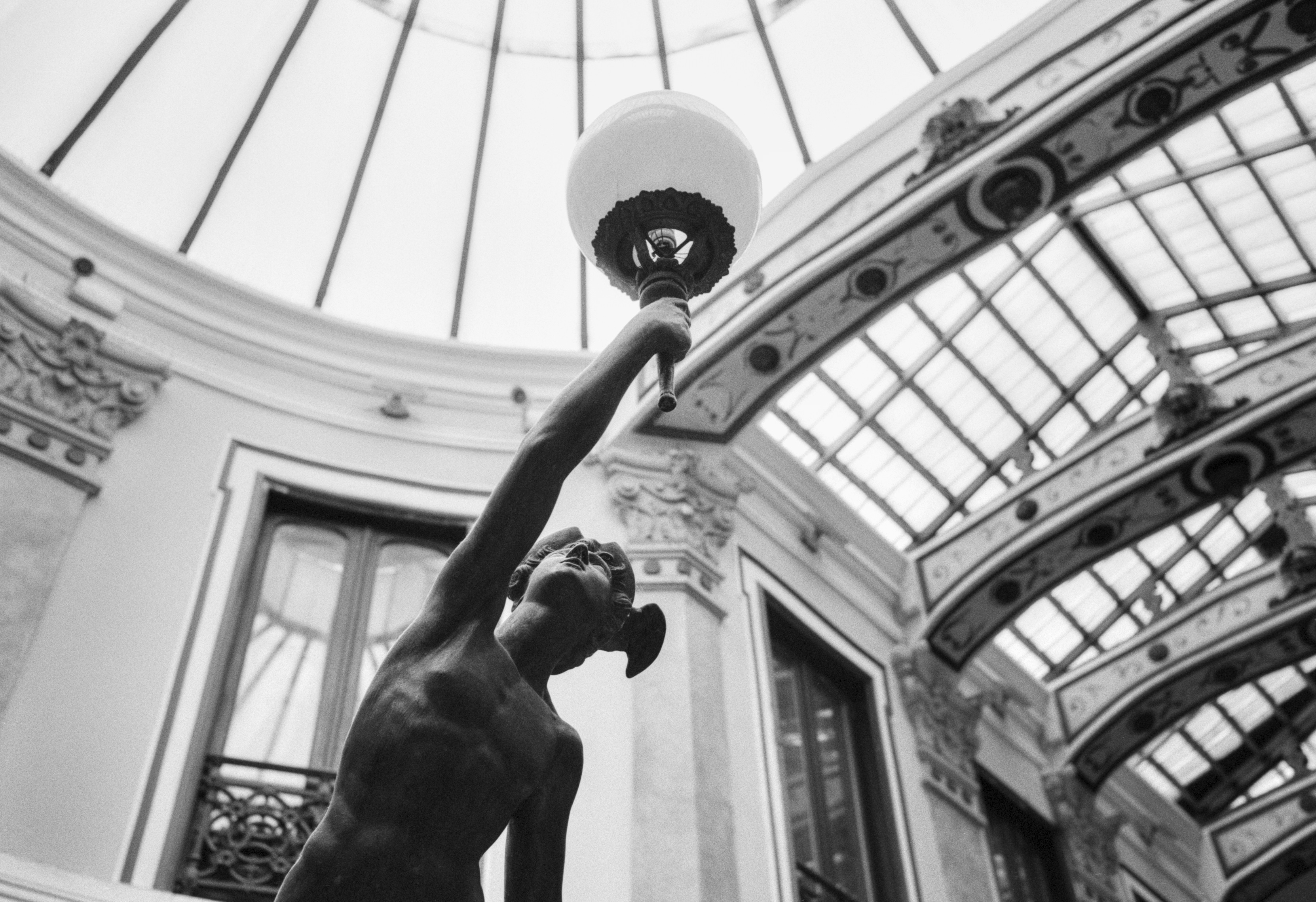
However, without diminishing their merits, I must confess that when I visited their 19th-century counterpart in the heart of Valladolid, the image of the modern shopping center was completely overshadowed. Today’s centers might indeed be temples of consumption, brimming with visual stimuli and sparkling aesthetics, but earlier arcades such as Pasaje Gutiérrez were genuine works of art. Tempered glass, LED panels, and contemporary polycarbonate structures simply cannot compete with the early modernist architectural beauty showcased in these historical spaces. Today’s purely functional buildings, designed for constant renewal, lack even the slightest architectural finesse and, certainly, any artistic trace deviating from their commercial purpose.
Pasaje Gutiérrez is a feast for the eyes, a stunning combination of architecture, painting, and sculpture enriched by authentic artists, like the painter Salvador Seijas, and inspired by others, such as the statue of the god Mercury, based on the original by Giambologna. It’s truly regrettable that, despite all the resources available today, we’ve lost that passion for well-executed projects that not only fulfill commercial objectives but also exude culture, good taste, and even evoke emotion.
