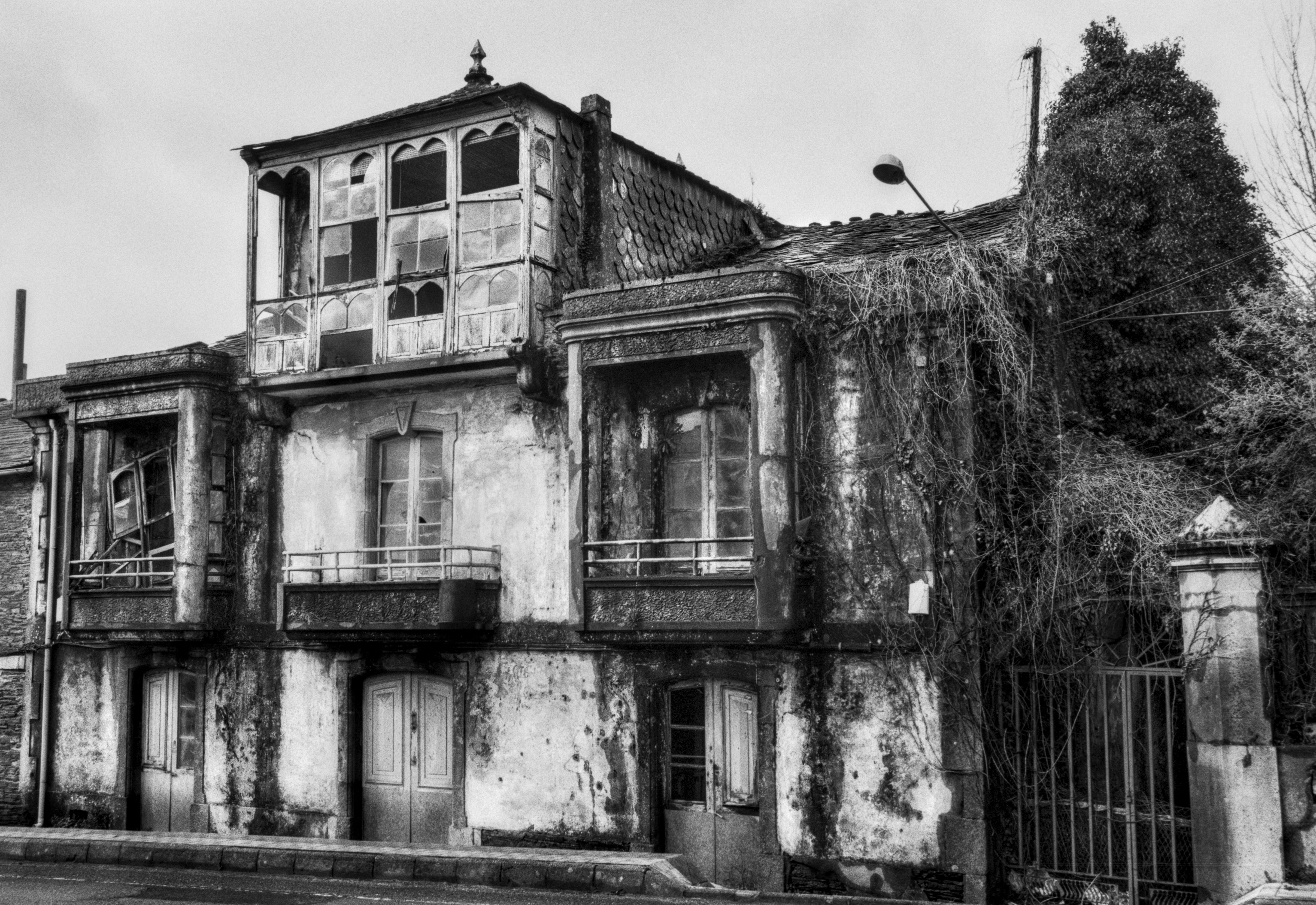
When you travel through Galicia with a careful eye, searching for peculiar places, unique elements that tell a story, or charming corners that captivate you with their atmosphere, you begin to realize just how widespread abandonment has become, especially in rural areas. Every few meters, it’s easy to come across a ruined house, a forgotten place that was once thriving, or a village emptied of its people, now holding a respectful silence for those who are no longer there.
A significant part of Galicia is fading away, disappearing, or transforming, becoming a fossil-like remnant of the past, silently offering a glimpse of what once was. Across the Galician landscape, we see the footprints of our grandparents, of other generations, of other times. And despite how recent that past may seem, it bears little resemblance to the world we live in today.
So much has changed that these remnants feel as if they belonged to another culture, another civilization. But let’s not be fooled, this past still touches us. We can still feel its warmth; it still reaches us with its fingertips, and it carries far more weight in our lives than we usually acknowledge. We must not forget its importance, all that it has given us, and how much we owe it. When we see its skeletal remains, no matter how worn or broken, we must recognize ourselves in them, and at the very least, preserve in our memory the identity that shaped us, that created us, and that will always be part of who we are.
